
As the pace of life accelerates, many people have this image in their minds: their daily thoughts race like an endless to-do list, one thing after another, never truly stopping. The more they try to control the situation, the more powerless they feel. Anxiety, inefficiency, and exhaustion eventually converge into an invisible river, pushing people into frustration and even depression.
Psychological research has confirmed that this “overly controlling desire” causes the brain to continuously secrete stress hormones, leading to disordered thinking. Simply put, the more you think, the greater the physical and emotional burden. Many people choose to escape through external stimuli, such as scrolling through their phones or working late, but this only deepens the cycle.
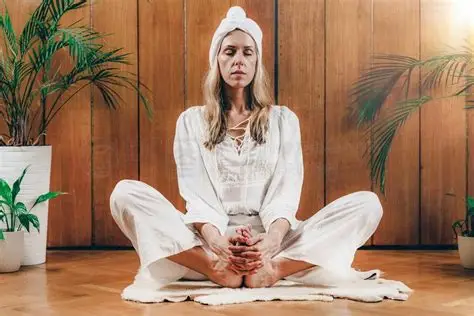
But when I discovered Kundalini Yoga, this cycle was interrupted for the first time. It wasn’t because I suddenly became “disciplined,” but because in that moment, I learned to accept—accept the chaos, accept the imperfections, and accept that I didn’t need to live my life in a constant state of tension. It was like slipping into a pair of comfortable yoga pants ; my body relaxed, and my mind began to loosen up, too.
When we are trapped in the “thinking trap”
Modern society relies heavily on logical thinking, with analysis, comparison, and choice permeating nearly every moment. While rationality is certainly important, relying solely on it can trap us in a binary state: constantly chasing pleasure while desperately avoiding pain. The result is a rollercoaster of emotions, leaving us unable to find peace.
In my yoga practice, I first experienced the concept of polarity—happiness and pain are inherently interdependent. If you insist on cutting them off, they will only revolt. Psychologists call this the “emotional repression effect”: the more you try to reject them, the stronger they become.
When you learn to observe with a neutral mindset, everything changes. It’s like maintaining a detached perspective in meditation, seeing emotions but not rushing to grasp or escape them. This “neutrality” is a recurring theme in Kundalini Yoga, reminding us that life is a drama, and the most important thing is not control but experience.

From Neutral Center to Physical Strength
Kundalini Yoga divides the mind into three basic modes: passive, active, and neutral. The first two are all too familiar: one sees only problems, the other only opportunities. Neutral, on the other hand, is a transcendent perspective, viewing life as a miracle.
This practice doesn’t just occur in the mind; it’s also deeply rooted in the body. Chronic stress can cause the adrenal glands to overproduce hormones, causing the body to overdrive, raising blood pressure and weakening the immune system. Data from the National Institute of Mental Health shows a clear causal relationship between chronic stress and various mental illnesses.
Yoga’s movements and breathing precisely address this imbalance. By stimulating the nervous and glandular systems, it restores energy flow. For example, spinal exercises activate cerebrospinal fluid circulation and improve mental clarity. Many people experience a sense of euphoric blood flow when practicing in lightweight yoga pants, as if their body and mind are rekindled.
Self-Observation: The First Step to Change
Change is never achieved overnight; it begins with self-observation. Osho once said, “Truth is always realized in silence.” In silence, people can clearly see their habitual patterns:
What external stimuli can cause rapid mood swings?
Which thoughts always consume energy?
When do we most want to control others or situations?
This kind of observation is not criticism, but a gentle reminder. After long-term practice, it will become a natural habit, allowing people to automatically enter a state of mindfulness.
Many times, during my early morning practice, I realize that yesterday’s anxieties aren’t that important. Putting on loose pants and letting my body unfold with my breath and movement, I feel as if I’m letting go of all those unnecessary thoughts.
Healing is a process
Hippocrates once said, “Healing is a matter of time, but sometimes also of opportunity.” This statement made me realize that healing is not a destination, but a journey. We won’t get rid of stress once and for all, but we can learn how to live with it through repeated practice.
Kundalini Yoga is just one method, but it’s opened a door for me—a door to trust and letting go. Even more interesting, when peace of mind is achieved, life is more likely to bring surprises. As they say: When you stop chasing, the universe will respond in unexpected ways.
Summarize
From a chaotic mind to a neutral observation, from physical tension to a sense of flowing energy, the biggest change I’ve experienced is this: true security doesn’t come from control, but from trust. Yoga reminds us that there’s no need to rush into a confrontation with the world; sometimes, just stopping, breathing, and observing is enough.
If you’re caught in a cycle of stress, consider leaving a gap in your life, even if it’s just ten minutes of breathing exercises. You might find that the long-lost peace has always been there, just waiting for you to turn around.