Focusing on your breathing is more important than perfect posture in yoga

Yoga is often misunderstood as a “pose” exercise. Many people, upon entering a studio, first gaze at themselves in the mirror, or at others trying to see if they can lift their legs higher or bend deeper. But if you put on your most comfortable yoga pants and calmly reflect, you’ll discover that what truly immerses you in the practice isn’t a standard pose, but your breath.
Breathing is the most underestimated part of yoga, and it determines the depth and state of mind of the entire practice. Today we will talk about why focusing on your breath, rather than your posture, will completely change your yoga experience.
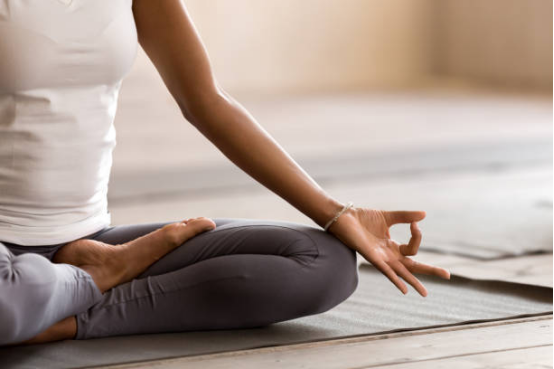
You think you’re “posing,” but you’re actually just holding your breath
Many beginners experience this moment: the teacher says, “Hold on for three more seconds,” and you put all your energy into maintaining the pose, only to find you’ve almost forgotten to breathe. While you may seem to have stabilized the pose, your body has actually already gone stiff, and your heart is beginning to panic.
Breathing is like a thread connecting movement and awareness. If this thread breaks, the practice becomes a purely physical challenge, not yoga. Psychological research shows that regular, deep breathing activates the parasympathetic nervous system, allowing the body to gradually relax, heart rate to drop, and thoughts to quiet. In other words, you don’t gain strength by straining yourself; you find balance through your breath.
So, the next time you put on your light pants and start practicing, ask yourself: Am I breathing?
Breathing is the most reliable anchor to “return to the present moment”
We’re constantly distracted by small things: the next email, the evening’s party, even the notifications on our phones. But breathing acts as an anchor, pulling you back into the present moment.
Try standing in a simple mountain pose, closing your eyes and feeling the breath flow in and out. As you inhale, your chest expands slightly; as you exhale, your shoulders naturally drop. With each breath, you’ll find that the hustle and bustle of the outside world gradually fades away. Even in your little corner of your home, wearing yoga pants, you can find your own peaceful space.
Many long-term practitioners would say that breathing turns yoga into a “moving meditation.” When movement and breathing are connected, each pose becomes no longer just an external shape, but an inner journey.
Breathing can heal stress better than posture
Modern people are under constant stress. Long work hours keep the sympathetic nervous system constantly active, putting the body in a constant “fight or flight” mode. Studies have shown that deep breathing can effectively lower cortisol levels and help stabilize heart rate and blood pressure.
This is why some people can feel noticeably relaxed even without practicing complex asanas, simply by wearing yoga pants and doing breathing exercises in their living room for ten minutes. This is because what the body really needs isn’t a standard posture, but an opportunity to slow down and reset the system.
The dialogue between posture and breathing
Interestingly, your breath can also alert you to any issues with your posture. For example, in Warrior II, if your shoulders are tense, your breath will become shallow. Meanwhile, in Child’s Pose, your breath will naturally deepen, indicating a stretch. This feedback loop helps you fine-tune your form and avoid injury.
Think of it as a conversation: your posture asks, “Is this right?” and your breath answers, “Too tight, loosen it up a little.” Slowly, you’ll learn to listen to this subtle voice, rather than just pursuing physical perfection.
Emotions are actually in the breath
Have you ever noticed that when you’re angry, your breathing becomes rapid, and when you’re anxious, your breathing becomes shallow? This is no coincidence. Breathing and emotions are one and the same. Learning to control your breathing is also learning to regulate your emotions.
Techniques like “ocean breathing,” which creates a gentle sound by constricting the back of the throat, can help you focus and calm down. Many people say after practicing it, “It feels like I’m being gently embraced by the waves.” This experience doesn’t require complex movements; all you need is a mat, some yoga pants, and a willingness to focus on your breathing.
Practical exercises: Start today
Having said all that, you might ask: How do I do this? Here are a few simple methods:
Start with observation : sit down, do nothing, and observe the natural rhythm of your breathing.
Let the movements follow your breath : inhale when you raise your hands or stretch, and exhale when you retract or fold.
Use numbers to stay focused : for example, breathe in for four, hold your breath for two, and exhale for six.
Try pranayama : Alternate-nostril breathing can help balance the mind.
Combine imagination : Imagine your breath as a gentle light that flows through your body as you breathe.
These methods require no additional equipment, just you and a pair of comfortable yoga pants , and you can start anytime.
Breathing is the soul of yoga
The beauty of yoga lies not in who can perform the most standard posture, but in who can truly immerse themselves in every breath. Breathing can calm you, make you focus, and also help you learn to slow down in your daily life.
So, next time you walk into a practice session, don’t rush to watch your movements in the mirror. Instead, close your eyes and feel your first breath. You’ll find that true practice isn’t about striking a perfect pose, but about letting your body and mind slowly soften in the rhythm of your breath.
Yoga is not about how you look, but how you feel. Every breath is an opportunity to find your own balance, comfortably wrapped in your yoga pants .