
nutrition butIf there were a training device that could subtly switch your body into an “effort-saving mode,” would you want to try it? People often focus on movement techniques, training load, or nutrition, but overlook a more subtle yet crucial variable—movement economy. It’s a core indicator of consistent performance over long periods for professional athletes, and it’s also key to whether ordinary trainees can “train more easily.”
When it comes to improving motion economy, yoga pants that fit snugly against the body and follow muscle lines are far more “technical” than many people think. The fabric coverage, pressure distribution, and support structure, if designed properly, can indeed reduce energy waste, allowing the body to move as if it were being assisted by “effortless motion gear” during running, yoga, strength training, or even commuting.
,The following section will delve into the underlying logic of movement economy, explaining why clothing can also contribute to training efficiency and gradually demonstrating how movement economy wear , designed specifically for dynamic activities, can make the body lighter, more stable, and less strenuous.
The implicit relationship between movement economy and clothing
Movement economy is often defined as “the energy required to complete the same movement.” It is influenced by factors such as breathing efficiency, muscle usage strategies, joint range of motion, and stability. However, in recent years, one detail has been frequently mentioned in sports science research: the assistance of external equipment, including shoes, patches, protective gear, and even yoga pants.
Especially in training environments that emphasize multi-directional movement, well-fitting yoga pants play a subtle but crucial structural role: they stabilize the pathways of joints and muscles, reducing micro-shaking and unnecessary deviations during movements. Every slight deviation of the body consumes extra energy, which is often “lost” unnoticed, making the training process more tiring and less endurance-efficient.
Many running coaches have long observed this phenomenon: wearing overly loose or inflexible pants, while offering freedom of movement, can make movements appear somewhat “scattered” over long distances. Conversely, well-fitting yoga pants enhance lower limb directionality, allowing for more focused movements.
It may sound insignificant, but when you repeat the action for 10 minutes, 30 minutes, or an hour, these small savings of energy accumulate like compound interest.
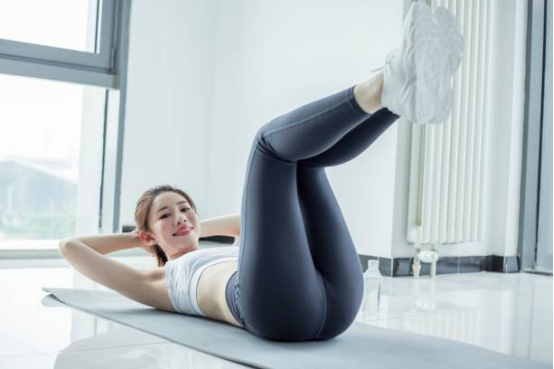
Fabric Covering and the Energy “Recirculation Effect”: Why Wearing the Right Pants Makes You Less Strenuous
A good pair of yoga pants doesn’t rely on tightness but on a clever way of covering to improve efficiency.
Enhances Stability Around Joints
Stability is not about restricting movement but about ensuring that the energy of movement is truly transferred.
Well-fitting yoga pants provide support around the knees and hips, allowing for more “linear” movements. Imagine how exhausting it would be if your hips rotated slightly outward with every leg workout, but a stable direction allows for concentrated power output, making it feel like “using the same amount of force, yet completing the movement much more easily.”
This is the core of effortless motion gear.
“Stability Reminders” for Key Muscle Groups
In exercises like squats, lunges, and yoga stretches, the gluteus medius, quadriceps, and hamstrings all need to be engaged steadily. When the fabric of yoga pants provides moderate tension according to the direction of the muscles, it’s like giving a subtle “directional cue” during the movement.
It’s not about restraint but rather a “gentle support.”
This makes it easier for the body to maintain the correct path, and the movements are naturally less strenuous—because there is no need to constantly correct deviations.
Reduce Unnecessary Muscle Vibrations
Many people are unaware that during running or dynamic exercise, the up-and-down vibration of muscles increases energy expenditure. Sports science refers to this as “soft tissue vibration energy loss.”
When the fabric of yoga pants has a certain compression effect, it can bind the muscles more neatly and reduce waste.
Advanced runners wear compression yoga pants not to “look professional,” but to lock energy in the movement trajectory rather than dissipating it through vibration.
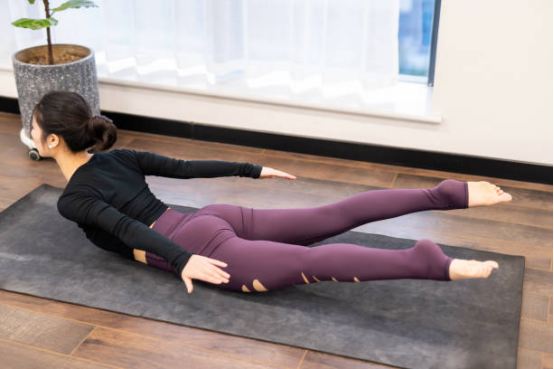
Why yoga pants and not other types of pants?
Every type of trousers has its own design motivation. Jeans are designed for durability and style, while athletic shorts are designed for breathability and lightweight. The essence of yoga pants, however, is to create a stable, flexible, and form-fitting dynamic environment.
More uniform elastic layout
Many materials are particularly taut in certain directions, but yoga-structured fabrics have a more even distribution of elasticity and can stretch in multiple directions. Such fabrics are better able to follow the body rather than resist it.
When the movement is not “led astray” by the fabric, the movement path is straighter, and energy is naturally more conserved.
More refined stitching structure
Whether training pants can save effort largely depends on the stitching.
If the stitches are not positioned correctly, they will pull, get stuck, and cause friction during movement, forcing you to constantly adjust your posture. These adjustments are actually a waste of energy.
High-quality yoga pants place the seams where they don’t interfere with muscle movement, making the body feel like it’s wearing a second skin during activity.
More precise body coverage
In particular, differences in hip width, leg shape, and even pelvic tilt, which are common among women, can alter the trajectory of movement.
More precise coverage equates to a more stable motion path.
say,This is why many coaches say:
“The same set of movements feels completely different when wearing different pants.”
It’s not a brand illusion; the structure itself is genuinely flawed.
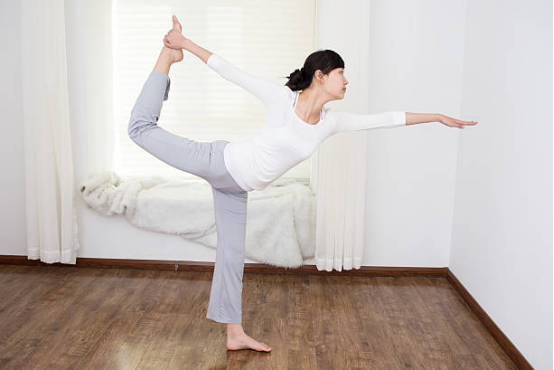
The practical performance of motion economy in different training programs
effect withoutYoga pants aren’t just for yoga; they’re essentially efficient training apps. Trainees often unconsciously experience the energy-saving effect, without realizing it’s a result of improved “movement economy.”
You should be able to agree with the following training scenarios.
1. Strength training: Reduces stability costs and allows for more focused exertion.
Many people experience slight leg wobbling, knee valgus, or involuntary pelvic tilting when performing squats and deadlifts. These are all signs of insufficient movement stability.
When the fabric provides adequate coverage and directionality, these swaying movements are significantly reduced.
As “stabilization costs” decrease, you can focus more on generating power rather than “maintaining stability.”
This is the essence of improving training efficiency.
2. Running training: Reduced soft tissue vibration, more linear energy return.
Many runners have experienced the feeling that “running in tight pants is easier,” but they can’t quite explain why.
“cleaner.”That’s because muscle vibrations are reduced, the stride direction is more stable, the hip swing is straighter, and the entire energy transfer path is “cleaner”.
WhatThe effect is especially noticeable over long distances:
what would normally start to feel tiring after 30 minutes may take 40 minutes if you wear the right pants.
This is the delayed fatigue effect brought about by motion economy.
3. Yoga training: precise angles, gentle yet stable output.
When doing yoga, angles are more important than strength.
A close-fitting fabric helps you find your “power flow” more quickly. In poses like lunges, warrior poses, and downward-facing dog, you’ll find it easier to maintain the angle without straining your body. This isn’t laziness; it’s a more efficient movement path.
difficulty butThe “effort-saving” here does not mean reducing the difficulty, but rather directing energy to the key points of the movement.
The Future of Training Efficiency: From Muscle Training to “Equipment Synergy”
muscles butThe trend in sports science is clear:
Future training will no longer rely solely on muscles, but rather on a combination of muscles and equipment.
Energy rebound systems in shoes, pressure garments used by professional athletes, and compression gear have all proven that external equipment can improve movement efficiency. Yoga pants, on the other hand, are the most accessible and effective type of movement economy wear for the average trainee.
When training becomes easier, you’ll be more willing to stick with it.
Making training less strenuous doesn’t necessarily require greater lung capacity, larger muscles, or longer endurance.
Sometimes, it’s simply about preventing energy from being wasted.
Yoga pants that fit the body’s lines are the quietest yet most efficient way to save energy—they don’t change your movements, but they do change the energy cost of your movements.
So next time you suddenly feel more stable in your movements, lighter when running, or smoother when doing yoga, you might want to think:
Maybe your equipment is making you switch to “effortless mode” in advance.