
When the body begins to move, the brain is actually simultaneously drawing an invisible, dynamic blueprint—a “body map” unique to each individual. This map is not an abstract concept; it is concretely manifested in the sequence of muscle contractions, the range of joint movement, the stability of core engagement, and the energy transfer between movements. Surprisingly, yoga pants play a far more strategic role in this process than most people imagine.
It’s not as simple as “wearing tighter clothes will make you train better.” The more realistic approach is that suitable training clothing, through pressure distribution, tactile feedback, visual lines, and a snug fit, continuously reminds the brain to correct movements, thus helping us build a clearer map of our body. Just like how dim light helps us take more steady steps when groping our way in the dark.
If this sounds a bit abstract, keep reading—you’ll discover that the interaction between clothing and movement is actually a very clever collaboration of the nervous system.
Why body mapping determines training quality: the dynamic blueprint is the true driver of movement.
Many people have similar experiences during training: the movement seems to be completed, but something always feels off, or the instructor says, “Use your glutes,” but you clearly feel your front thighs doing the work. The root cause of these “off” feelings is a lack of understanding of your body’s internal map.
Research indicates that the body relies on proprioception when performing fine motor control—that is, knowing where the body is and what it is doing without actually seeing it. The clearer the map, the more precise the movements; the blurrier the map, the more effort is required for the movements, and the easier it is to lose control.
This is where movement feedback wear, like well-fitting yoga pants, comes in handy. Yoga pants, through their fit, compression, lines, and the feel of the fabric, provide additional sensory points to the body, allowing you to more quickly realize whether you’re on track. In industry parlance, it’s like this:
“Let the feeling precede the action.”
For example, when you do a simple squat, the direction of the stretch in your yoga pants and the feeling of being wrapped around the outside of your thighs subtly tell you whether your knees are pointing outwards, whether your hips are engaged, and whether your core is stable. Many users have shared similar experiences: after changing into suitable yoga pants, the movements “magically become smoother.” This isn’t magic; it’s just that the system feels like it has more “navigational information.”
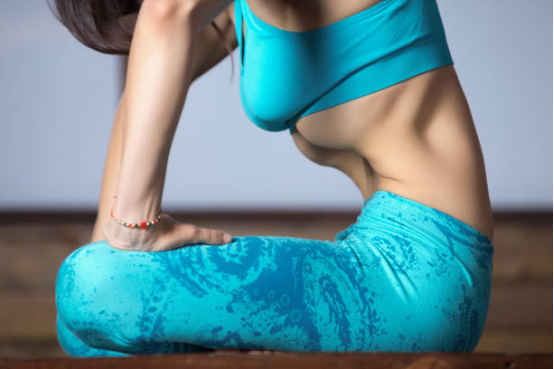
How haptic feedback helps the brain create more accurate brain maps
In motor training, tactile feedback has always been key to high-quality body map practice. Neuroscience studies have extensively demonstrated that external force or tactile feedback can improve motor control, and well-fitting yoga pants provide a continuous, stable, and conscious source of feedback.
1. A feeling of being enveloped can enhance the “presence” of muscles.
When a muscle area experiences a slight contraction, the brain is more likely to “select” it, making muscle recruitment during movement more precise and controllable. Many athletes wear close-fitting gear during training because this tactile stimulation helps them find the power path more quickly.
2. Miniature navigation is provided in the stretching direction.
Whether it’s sitting back, hip flexion, or knee trajectory, the direction of the pants’ stretching and contraction creates a “linear cue” during movement.
You don’t even need to consciously feel it; it’s already helping your brain make movement corrections.
3. Reduce the feeling of disorientation in movements and improve movement stability.
Some people experience momentary “movement drift” during fast-paced movements or training requiring complex control, such as losing their running rhythm or becoming unstable in yoga balance. Properly oriented clothing can reduce this drift, resulting in more consistent movement.
mechanism.”In other words, it is a gentle, continuous, but highly efficient “real-time motion calibration mechanism”.
How joint flexibility is affected by clothing is key to understanding the boundaries of the body map.
The flexibility of a joint is not just about “whether you can stretch out,” but also about the body’s perception of its own boundaries. And the formation of this sense of boundaries is greatly influenced by touch and the body’s feedback during movement.
boundaries.”When yoga pants form a stable wrap around the joints, the brain is more likely to “perceive the boundaries”.
For example:
- The tactile sensation during hip flexion can indicate whether the flexion is deep enough.
- The stretching of the trouser legs during a lunge motion indicates whether the knee trajectory is within the safe zone.
- The tension of the outer fabric during rotation can indicate whether the torso has over-rotated.
This tactile sense of boundaries allows trainees to more stably control the range of motion, thus avoiding overextension or force deviation due to an unclear body map.
Therefore, many advanced trainees often say, “After changing my equipment, my body’s circuitry suddenly became clearer.”
This is a very real experience.

From motor control to training awareness, how clothing participates in the brain’s motor learning
To view training merely as muscle stretching and strength output is too superficial. Modern sports science views training as “neural learning.”
Within this system, yoga pants represent a high-value training awareness outfit—they expand the “channels” through which the brain receives information, allowing for faster and cleaner movement learning.
1. Visual lines enhance the sense of movement path.
Many pants have natural lines on the sides or front and back fabric, and these lines can significantly increase the visibility of movement in a mirror.
Visual and tactile feedback is a highly efficient method for body mapping.
2. Real-time perception of motion deviation
When the movement deviates from the original trajectory, the pants will “tell you”:
- The part that is pulled particularly tight
- A loose area
- Asymmetrical tactile sensation
These subtle changes will make you realize that “your movements are off track,” even before the coach can point it out.
3. Improved focus at the emotional level
WearingWearingReal user feedback often mentions a less technical feeling:
wearing well-fitting training clothes makes it easier to focus on the body and less likely to get distracted.
—The more immersed you are in training, the easier it is to update your body map—an experience that everyone who trains deeply can relate to.
What happens during training with no feedback from a contrasting perspective?
Sometimes the best way to understand something is to look at its opposite.
When training clothing fails to provide clear tactile information—for example, if it is too loose, slips frequently, or the fabric lacks a fixed direction—situations often occur, especially when wearing something like yoga pants that doesn’t offer the right fit or structure. These include:
- The brain has difficulty pinpointing muscle movements, and actions still rely on “inertia.”
- Excessive or insufficient range of motion of the joint.
- The force application path is unclear, and the quality of the movement is inconsistent.
- The motion correction speed is slow, and the body map remains in a “blurred state.”
This isn’t a problem with the trainer but rather a lack of information input. When you realize that training quality isn’t just determined by effort but by “information density,” you’ll better understand why many professionals emphasize the importance of controlled dressing, such as wearing the right yoga pants.
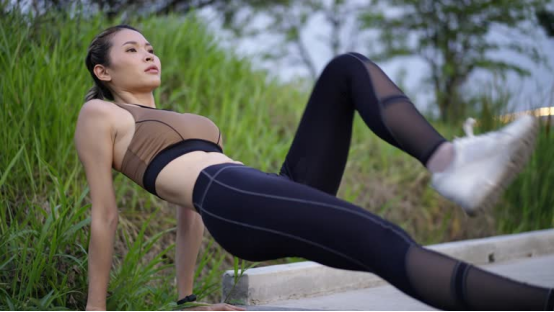
The future development of body mapping and equipment: Clothing is becoming a second sensory system
Industry trends indicate that sportswear is shifting from “improving comfort” to “improving motion sensing capabilities.” Some brands have already begun incorporating these features into their apparel.
- Regionalized pressure distribution
- Action direction guidance
- Micro tactile texture
- Dynamic stretching structure
These designs all point to the same goal—
to make clothing part of the body’s map.
As body map practice becomes more and more popular, people are increasingly realizing that training equipment is not an external object but an extension of a bodily sensory system.
If you’d like to learn more about the structure and logic of movement feedback wear, you can visit our website for related articles to make clearer decisions about your training gear.
The clearer the body map, the easier the training.
Training is never about fighting against your body but about having a dialogue with it.
And the role of yoga pants in this dialogue is to make every movement’s feedback clearer, more timely, and more reliable.
When you begin to be able to “see” your body map, your training will enter a whole new phase—
Movements become more stable, power generation becomes more precise, learning speed increases, and even the synergy between your body and brain becomes smoother.
If the body is a constantly updated map, then each training session with the right equipment is like adding clearer lines to that map.
Can you already feel the presence of that “invisible map” in your training?
Are you interested in further strengthening it?
Before training, feel free to visit our website to browse more about training awareness yoga pants; you might find key tips for your next step of improvement.