The combination of wearable health monitoring and yoga pants: when sports data is integrated into your daily wear

Imagine a seemingly ordinary pair of yoga pants that can capture your heart rate, breathing rate, and body temperature and even alert you to any deviations in your posture during your next squat. While it sounds like futuristic technology, it has already quietly entered the realm of modern athletic life. The integration of wearable health monitoring into clothing is no longer limited to smart bracelets or watches; it’s now being incorporated into more intimate, invisible everyday wear.
From smart bracelets to smart fabrics: The next step in health monitoring
Over the past decade, wearable devices have taken off from the wrist. People use Apple Watches to track running distance and Fitbits to track sleep quality. However, as users’ demands for data accuracy and comfort increase, a new problem has emerged in the market: wristbands don’t always record comprehensive data, especially for lower-body exercises such as yoga, Pilates, or strength training.
As a result, tech companies and sports brands have collectively turned their attention to clothing with a larger surface area for contact with the human body. Compared to wristbands, yoga pants maintain more stable contact with the skin and can capture more physiological signals, such as electrical muscle activity (EMG), skin conductance response (EDA), and respiratory rhythm. By embedding flexible sensors in the pants’ fabric, these smart yoga pants can collect and analyze dynamic body data without compromising the wearing experience.
This means that every stretch and every deep breath you take will be captured in real time and converted into data feedback, helping you understand your body more accurately.
How sensor technology can be seamlessly integrated into yoga pants
Today’s smart fabrics are no longer simply a collection of electronic components. Instead, they incorporate technology into every inch of fabric, using materials like nano-conductive fibers and heat-sensing threads. They are lightweight, soft, and washable without compromising the pants’ elasticity or breathability.
For example, some brands of yoga pants have built-in micro-sensor arrays that can detect the contraction frequency and force of your core muscles. If the system detects core instability during a plank, it will send a subtle reminder via the mobile app, prompting users to adjust their breathing or center of gravity. This immediate feedback mechanism helps users avoid sports injuries caused by incorrect posture and makes training more scientific.
More advanced models even integrate heart rate monitoring, body temperature sensing, and motion analysis. Data can be synced directly to mobile health apps via Bluetooth or a low-power transmission chip, eliminating the need for additional equipment. In the future, yoga pants will become a “data interface,” allowing your body to communicate directly with the health cloud.
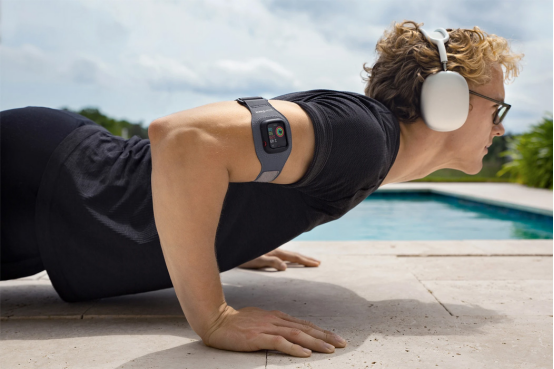
Scene extension: More than just yoga practice
The applications of smart yoga pants go far beyond the scope of yoga studios. They are becoming a potential role in fitness, rehabilitation, and even office scenarios.
- During fitness training: The sensor system can detect imbalance in leg muscle force and prompt adjustment of the force ratio between the left and right sides, thereby improving movement stability.
- In rehabilitation therapy, patients can use wearable yoga pants to record joint movement data during recovery, and doctors can remotely monitor rehabilitation progress and make personalized adjustments.
- On your daily commute: Some smart pants can detect changes in blood circulation when you’re sitting for extended periods of time and vibrate to remind you to get up and move around—a more user-friendly health intervention than a “sedentary alarm.”
Even in the field of women’s health management, some yoga pants can use temperature and humidity sensors to assist in analyzing ovulation cycles or menstrual stages, helping users better plan exercise intensity and rest time.
This design concept of “clothing as a health terminal” is redefining the boundaries between sports and life.
From data to insights: When yoga pants become your health consultant
The core value of smart wearables isn’t just about “recording” but “understanding.” Future yoga pants will not only capture data but also use AI to analyze individual movement patterns and provide improvement recommendations.
For example, if the system detects a mismatch between your breathing rate and heart rate, it might suggest gentle stretching or meditation exercises. If muscle tension is chronically high, it might recommend reducing high-intensity training and increasing relaxation sessions. By accumulating long-term data, AI can create a “physical behavior profile” for users, making health management more personalized.
More forward-thinking designs include “adaptive fabrics”—materials that automatically adjust their breathability based on body temperature or perspiration. These pants not only sense but also react, giving technology the ability to truly be a “skin that senses temperature.”
Challenges and balance: the tug-of-war between technology, privacy, and comfort
Of course, the widespread adoption of any new technology is accompanied by controversy. People are beginning to question: Is the data collected by these yoga pants secure? Who has access to this health information?
To this end, many brands are introducing local encryption and anonymized storage mechanisms to protect user privacy from abuse. At the same time, industry standards are gradually being established, such as data privacy certification systems such as ISO/IEC 27552.
On the other hand, comfort remains a top priority for users. No matter how powerful a pair of pants is, if they feel restrictive, consumers will still choose to forgo them. Therefore, manufacturers are working to make technology “invisible.” Using microchips, seamless seams, and lightweight sensors, pants still look like ordinary yoga pants—just smarter.
Future trend: Smart clothing may replace smart bracelets
As health monitoring becomes increasingly integrated into everyday clothing, smart bracelets may no longer be the only way to access it. Future yoga pants will even be able to automatically identify your activity type and switch between data modes—from morning jogs to meditation, from squats to stretching, all done silently in the background.
Some startups are already testing “closed-loop” systems—when pants detect insufficient physical activity, they trigger reminders on your phone and even adjust the color temperature of smart lighting to encourage movement. This integrated experience is shifting “health” from a device-based perspective to an environmental one.
Over the next five years, the smart sportswear market is expected to grow at an average annual rate of 25%, with yoga pants becoming a key category. Both functional sportswear brands and high-end fashion brands are vying for a foothold in this market.
When technology is integrated into fabrics, health is no longer an added value
When we talk about yoga pants, it’s no longer just about stretch, cut, or aesthetics. They’re beginning to possess the ability to sense things, becoming an extension of human health management.
Perhaps in the future, you’ll wake up and put on a pair of smart yoga pants, and they’ll quietly remind you, “I’m feeling good today, perfect for a flow yoga session.” It might sound a bit sci-fi, but it’s a reality.
Technology doesn’t make exercise complicated; instead, it makes every movement more meaningful—it helps us hear the language of our bodies and understand the wisdom behind even the most inconspicuous pair of pants.