Spinal health and yoga practice: detailed support in clothing and postures

Why is spinal health so important in yoga?
Have you ever felt a small area of your lower back suddenly get stuck while doing yoga? My first deep backbend wasn’t a smooth, effortless experience, but rather a sense of tightness and pressure. I later realized that spinal health isn’t just an afterthought; it’s central to yoga’s safety and effectiveness.
Interestingly, spinal health isn’t just about how you perform asanas; your attire also plays an invisible role. A properly fitted pair of yoga pants can support and free your spine as you stretch, twist, and bend, while an unsuitable pair can invisibly increase your risk.
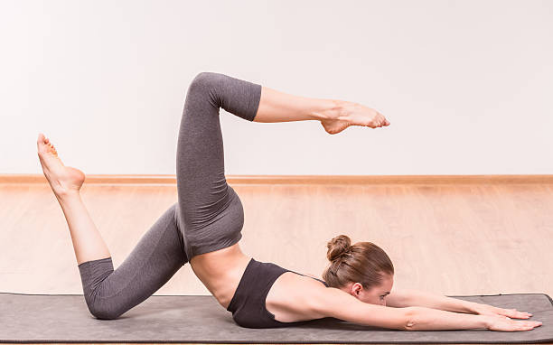
Yoga and the spine: a natural tuner
Yoga is recommended by many physical therapists as an exercise to improve spinal health. According to a study published in the Journal of Orthopaedic & Sports Physical Therapy, regular yoga practice can relieve chronic lower back pain and improve core muscle stability.
Especially in some classic poses, the spine is almost the protagonist:
Cat-Cow : Use your breath to move the spine and help release stiffness.
Downward Dog : This pose stretches your hamstrings while lengthening your back, creating more space in your spine.
Bridge Pose : Strengthens the lower back and buttocks muscles, and is particularly friendly to people who sit in a daily manner.
However, whether these poses can truly have a positive effect depends largely on supporting details. For example, if your pants are too tight or the fabric lacks stretch, you may unknowingly restrict your range of motion, thereby affecting the natural extension of your spine.
The role of clothing: Why can a pair of suitable yoga pants protect the spine?
Some might ask, aren’t pants just pants? Actually, they are not. From the perspective of spinal health, clothing is a “micro-support system.”
waist
design of yoga pants can provide additional core stability and prevent excessive collapse of the lumbar spine during practice. This stability is especially important for people with minor lumbar problems.
The freedom and stretch of
spandex and nylon blended fabrics allow you to maintain natural movements when bending back and twisting without being “cut off” by the fabric. If you choose everyday sports pants, you may feel pulled when squatting or bending forward, which is an extra burden on the spine.
Pressure dispersion:
Some high-end brands of yoga pants use flat stitching on the seams to avoid friction and local pressure. This may seem small, but it can reduce unnecessary tension in the body during poses.
In other words, the right yoga pants are not about making you “look professional”, but about allowing your spine and core muscles to work most naturally.
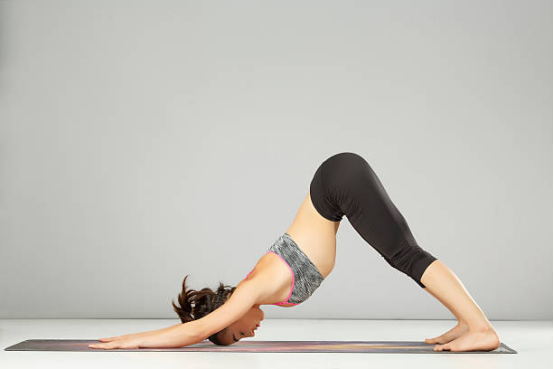
Posture details: dual support from clothing to movement
When it comes to spinal health, we can’t just talk about clothing; we must also return to the movements themselves. The two actually complement each other.
Twists
can be difficult to perform without elasticity at the waist and hips. Flexible yoga pants allow you to truly radiate power from your spine, rather than relying on forced twisting with your arms.
pose
or camel pose. Wearing yoga pants with a supportive waist can help reduce discomfort both mentally and physically.
stillness
. Tight pants can restrict blood circulation, and prolonged meditation can lead to stiffness in the lower back. Comfortable yoga pants can actually help you relax your spine naturally during meditation.
This also explains why many coaches advise students not to “replace” yoga pants with ordinary sweatpants.
User experience and industry trends: more than just dressing up, it’s also an investment in health
In the US market, brands like Lululemon and Alo Yoga have consistently emphasized the functionality of their products rather than their appearance, which is closely related to user feedback.
For example, a user with chronic lower back pain shared on a community forum that since switching to a pair of supportive yoga pants , she’s experienced significantly less pressure on her lower back when doing bridge poses. Another yoga enthusiast who regularly practices in the mornings noted that in cold weather, the warmth of her yoga pants allows her to practice more outdoors, rather than cutting back due to fear of the cold.
This shows that the connection between clothing and spinal health is gaining increasing attention. The industry is also responding to this demand: functional zoning design, ergonomic tailoring, and even the addition of smart fabrics are gradually making yoga pants an integral part of health management.
From posture to clothing, a comprehensive approach to spinal health
Spinal health isn’t a one-time exercise; it requires comprehensive consideration, from movement details to lifestyle habits and clothing choices. The right yoga pants aren’t just an extra expense; they’re a long-term investment.
Before you roll out your yoga mat next time, ask yourself: Will my spine be restricted during today’s practice because of what I’m wearing?