How to achieve the visual effect of longer legs with yoga pants featuring a specific line design?

randomly butIn front of the mirrors in many gyms, people often scrutinize their lower bodies: Could their legs appear longer? Could the lines be sharper? Interestingly, changing visual proportions doesn’t depend on high heels or a specific body type. The right arrangement of lines and fabric structure can instantly alter the overall silhouette when you put on yoga pants.
Vision is both a science and a psychological suggestion, and whether you can achieve the effect of lengthening proportions largely depends on the direction of the lines, the way they are pieced together, and the distribution of textures in the pants. Just like when designers create leg-slimming leggings, they don’t just draw two lines randomly, but calculate the presentation after light and shadow, visual focus, and dynamic stretch.
streets andNext, let’s break down these “visual magic tricks” and see why many visual-line pants have become a common staple in gyms and on the streets, and how contour design wear reconstructs the proportions of the lower body.

How can the principles of line visual perception affect leg proportions?
,Many people’s understanding of visual lines is still limited to “vertical lines make you look slimmer, horizontal lines make you look wider,” but in yoga pants, the arrangement of lines is far more complex than in black and white striped tops.
Especially on elastic fabrics, the lines dynamically change as the legs bend and stretch , creating a “visual elongation effect that moves with movement.”
guidelinesVertical guide lines make the visual focus more concentrated.
-slimmingThe effect of vertical lines has been mentioned in publicly available R&D reports from multiple sportswear brands:
When a vertical line extends from the waist to the ankle, the eye instinctively follows the line, creating the effect of “straightening” and “lengthening” the legs.
This concept is most commonly seen in leg slimming leggings, for example:
- The elongated, thinner lines on the outer thighs can reduce the appearance of roundness in the thighs.
- The calf muscles narrow at the base, creating a natural gradient from thick to thin.
- Some contour design wear will slightly tilt the lines inwards, making the legs appear slimmer.
No need for exaggeration, just a single line. The visual effect will automatically enhance the image.
The role of splicing design in visual compression
Many people overlook the importance of contrasting textures, but it’s a powerful element in visual illusion.
When darker contrasting colors are used on the outer side of trousers, it creates a “narrowing” effect, making the leg line appear straighter.
Conversely, using lighter-colored areas on the hips or upper thighs can enhance the three-dimensional curves and create a sense of “lifting” in proportion.
This layout has been described by many users on social media as “looking like a slight adjustment to the figure,” and visually it does resemble the logic of photo editing software—except that it happens in reality.
Changes in texture direction affect dynamic scaling
stable butTexture is more than just decoration; it influences the direction of light and shadow.
When textures are arranged diagonally, the dynamic silhouette of the legs appears more compact.
When textures are arranged horizontally, the legs appear more stable, but slightly wider.
The “herringbone” pattern, widely used in athletic pants, has a slight visual effect of vertical extension and is therefore commonly found in the fabric options for high-performance yoga pants.
These designs, which used to be found only in professional compression sportswear, such as athletic leggings, have now been incorporated into everyday sports and street style.
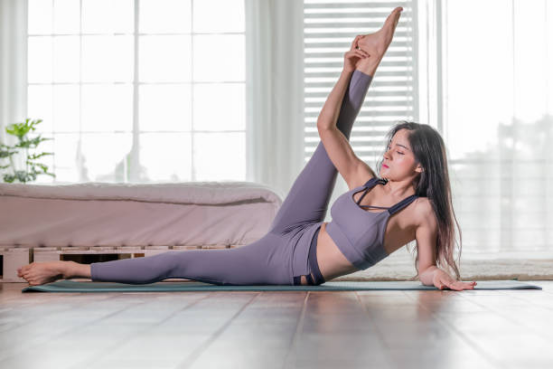
How to use lines to create a natural, elongated effect
Visual design isn’t just about the pants themselves; styling, color choices, and body movement also significantly impact the overall presentation. This strategy is especially crucial for users who want to create a slimming effect with yoga pants.
The Combination of Colors and Line Direction Reinforce Each Other
Many fashion experts and fitness bloggers have mentioned that while dark colors aren’t a universal solution, combining them with clean lines can dramatically enhance the overall effect—especially in visually designed yoga pants.
For example:
• Dark gray trousers with light gray side stripes → elongate the legs
• Dark main fabric + light and dark mixed patchwork → narrows the outer silhouette
• Solid color trousers + vertical texture → understated yet effective sense of elongation
A simple principle is that
color “conceals volume,” while lines “emphasize direction.”
When the two are combined, the visual flow naturally moves toward “length,” which is why many contour-focused yoga pants use strategic line placement to optimize proportions.
Using the Waistline Position to Reorganize Proportions
The waistline often determines visual proportions more than the legs themselves.
V-shaped or high-waisted pants—commonly seen in modern yoga pants—naturally create the effect of “legs starting from a higher position,” making the legs appear longer.
Stitching that draws the visual focus inward further enhances the slimming effect, resulting in cleaner, more streamlined lines.
This design is considered “one of the most noticeable changes after wearing” in many user feedback reports because the waistline is the starting point for visual proportions.
Many users specifically mention that well-structured yoga pants amplify this effect by guiding the eye upward and creating a smoother silhouette.
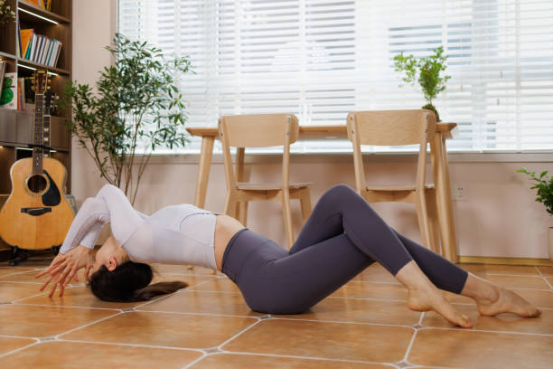
The Interaction Between Fabric Structure and Body Lines
The interaction between the fabric structure and the body’s lines makes the proportions more realistic.
Even the most intricate lines and designs rely on the support of the fabric to achieve their effect. Recent trends in the sportswear industry show that soft yet supportive fabrics—commonly seen in yoga pants—can gently shape without excessive compression and are key factors in creating a visually elongating effect.
Soft and Directional Fabrics Improve Leg Smoothness
Visual extension requires a smooth surface.
When the fabric is too loose, the lines lose their direction;
when the fabric is too stiff, creases or seams will appear on the pants, visually disrupting the silhouette.
Therefore, many contemporary yoga pants use lightly fitted, slightly textured materials to ensure that the lines maintain a stable direction even when dynamically stretched.
Many consumer reviews point out that this type of fabric does not deform excessively during squats or leg presses, thus maintaining a consistent visual appearance.
How Flexible Fabric Blocks Create Three-Dimensional Effects
Some visually designed pants incorporate different elastic structures in specific areas, for example:
• Inner Thigh Elasticity
Using a more elastic fabric on the inner thighs helps avoid tightness that causes “lateral expansion.”
• Outer Leg Stability
Using a more durable fabric on the outside helps keep the lines straighter.
• 3D Woven Hip Texture
The buttocks feature a 3D woven texture that provides a lifting and enhancing effect.
The layout of these contour design wear pieces is not intended for shaping, but to make the visual focus more concentrated, thus naturally optimizing the proportions. This is also why visually engineered yoga pants continue to rise in popularity.
Brand Trend Insight: Visual Design is Becoming Mainstream
Looking at global fitness apparel trends, optimizing body shape with visual lines has become the industry’s default standard.
According to annual reports from several sports brands, sales of athletic pants categorized by visual lines have increased significantly in the past two years, with consumers paying even more attention to the need for “looking taller and slimmer” than to “support” or “compression”—a shift that has also boosted interest in yoga pants with contour-focused designs.
Social media fashion trends are gradually shifting from “purely basic” pieces to “functional visual designs,” with visual line pants—including many styles of yoga pants—seeing a surge in discussion and becoming a popular choice for both streetwear and athletic styles.
Consumers are most interested in the following aspects:
- Are the lines natural?
- Is the visual proportion realistic without overemphasizing it?
- Can it combine comfort and everyday wearability?
Because of this trend, various designs are beginning to move towards more detailed and subtle approaches so that the visual effects do not appear “deliberate.”
How to choose visual line designs that suit your proportions
One of the most frequently overlooked points when choosing yoga pants is that everyone’s leg structure is different, and the suitability of different line directions varies.
Below are some of the most practical strategies from industry experience to help users find a visually appealing design that better matches their proportions.
Those with fuller thighs
Suitable for narrow splicing on the outside or narrow dark lines, drawing the eye to the front.
Those with straight or muscular calves
Suitable for slightly inward-sloping or asymmetrical lines, making the visual trend softer.
Those with noticeably bowed leg lines
Suitable for vertical partitioning design, it keeps the visual focus “on the center” and avoids exaggerating curves.
Those who pursue an overall elongated proportion
Suitable for full-length designs where the lines extend from the waist to the ankle.
These suggestions come from the common experience of sports stylists and fitness coaches and also align with the feedback logic of a large number of consumers.
Conclusion
Lines are not decoration; they are the language that determines visual proportions.
When yoga pants utilize appropriate directional design, reasonable stitching, and textures that coordinate with body movements, the leg proportions are naturally made more streamlined and cleaner.
This effect is not exaggerated, nor does it rely on excessive compression; rather, it guides the visual flow through design, making movement and proportions more harmonious.
If you want to further understand how visual lines interact with fabric, you can visit our blog to learn more. The next time you stand in front of the mirror, you will understand your proportions better and know how to make your vision work for you.