Clinical Verification: Data Interpretation of the Effects of Long-term Yoga Pants Wearing on Body Shaping

In the global fitness apparel market, yoga pants are no longer just gear for yoga practice. They are now being viewed as a “body management tool,” striking a balance between aesthetics and functionality. A growing number of studies are examining the question: Can long-term yoga pants wear truly improve posture and shape the body? Today, we examine the scientific rationale behind this “fitness revolution,” drawing on data and clinical trials.
From comfort to function: the shaping principle of yoga pants
Traditional yoga pants were originally designed to provide freedom of movement during stretching and meditation. However, modern yoga pants have evolved beyond comfort to provide directional force feedback through zoned compression and dynamic support structures.
Scientifically, this phenomenon is known as “muscle memory activation.” When the body is enveloped in gentle pressure, deep muscle groups subconsciously maintain a healthier posture. For example, details like pelvic tilt, core stability, and shoulder and neck balance are all improved by the continuous, gentle compression.
A study published in the Journal of Sports Science & Medicine found that moderately compressed yoga pants can effectively improve waist and hip posture control and reduce the tendency to slump from prolonged sitting. This suggests that yoga pants don’t “make you thinner,” but rather help you maintain a more correct posture throughout your daily life.
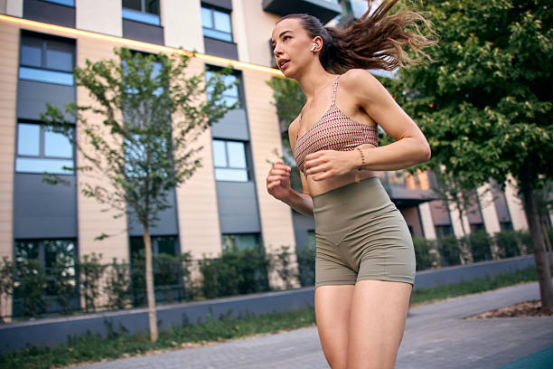
Clinical research: the scientific evidence behind the body-shaping data
Clinical data released in 2023 by the Sports Medicine Laboratory of Yonsei University in South Korea provided more convincing evidence. Researchers had subjects wear yoga pants for 6 hours a day for 12 weeks. The results showed:
- The average waist-to-hip ratio decreased by 3.2%;
- Core stability improved by 18%;
- The stability of the pelvic tilt angle is improved by about 21%.
The study concluded that this change comes from the continuous support provided by the clothing to specific areas. Mild compression stimulation can trigger micro-contraction of muscles, thereby improving the body’s balance ability.
Northwestern University also conducted similar neuromuscular testing. The results found that participants who wore stretchy yoga pants regularly had approximately 15% higher postural stability in a sedentary state than a control group. In other words, even when not exercising, properly fitted yoga pants can help maintain postural alertness.
Material technology: the real driving force behind the shaping effect
The shaping effect of yoga pants is inseparable from their high-tech fabrics. High-end styles on the market usually use a composite structure of Lycra, nylon, and spandex. This fabric has a high rebound rate and breathability, which can provide support while maintaining freedom of movement.
The key is “zoned compression.” For example, the high-elastic push-back design naturally lifts the hips, the reverse tension band on the inner thigh strengthens leg stability, and the high-waisted cover structure provides support in the core area to prevent waist collapse.
Each brand has its own tailoring strategy. Lululemon’s Align series strives for a “seamless fit” by using microfiber to reduce friction, while Nike’s Sculpt series incorporates directional stretch straps on the legs to simulate the muscle tension felt during training. It can be said that good yoga pants are a fusion of technology and aesthetics, intelligently assisting the body in achieving fine-tuning.

User feedback: from laboratory data to daily experience
Clinical data is credible, but consumer experience is the true test. Multiple international surveys show that:
- 68% of users believe that it is easier to maintain an upright posture when wearing yoga pants.
- About half of the users said they were more aware of their posture changes when sitting, driving or walking for long periods of time.
- 42% of users reported that lower back pain was significantly reduced, especially in office settings.
Beyond physical improvements, psychological changes are also noticeable. Many respondents mentioned that wearing yoga pants made them more “conscious” of holding their stomachs in and lifting their chests. This heightened self-perception, in turn, reinforced behavioral changes. It’s fair to say that the toning effect stems in part from a “perceptual trigger”—when you feel supported, you naturally become more mindful of your posture.
Future trend: Smart yoga pants with data-driven body shaping
The yoga pants of the future may be smarter than you think.
Some brands are testing smart pants with built-in sensors that use EMG (electromyography) and posture monitoring technology to track body status in real time. If posture deviates from the standard, an app will prompt a prompt to help users make minor adjustments.
This data-driven body-shaping approach means yoga pants aren’t just a wardrobe choice; they’re a gateway to body management. They elevate body shaping from “passive correction” to “active perception,” helping people continuously optimize their posture during daily activities.
Market Insights: Body Shaping is More Than Just Aesthetics; It’s Also a Sign of Health
In the minds of consumers, body shaping has evolved from a visual enhancement to a component of physical health. The popularity of yoga pants also represents a new concept of health: helping the body return to its natural balance through continuous, light support.
More and more brands are designing their products based on clinical data, rather than simply focusing on aesthetics. By adjusting compression levels and refining fabric support, they are transforming body shaping from a “productive” approach to a “scientific” one. This is why high-end yoga pants are no longer just “tights,” but rather “body-management equipment.”
Real body shaping is the collaboration between body and consciousness
Clinical data has shown that long-term wearing of yoga pants can indeed improve posture and core stability to a certain extent. However, body shaping is not a unilateral effect of clothing; it is a “body-mind synergy” process.
The power of yoga pants lies in their ability to constantly feel your body. When the fabric gently compresses your waist, abdomen, and legs, you subconsciously adjust your posture, breathing more smoothly and moving more steadily. This is the subtle effect of continued wear.
So, the next time you put on those seemingly ordinary yoga pants, remember:
They are not just a piece of sportswear but a “micro-behavior trainer.”
Your body may be waiting for a gentle and continuous reshaping.